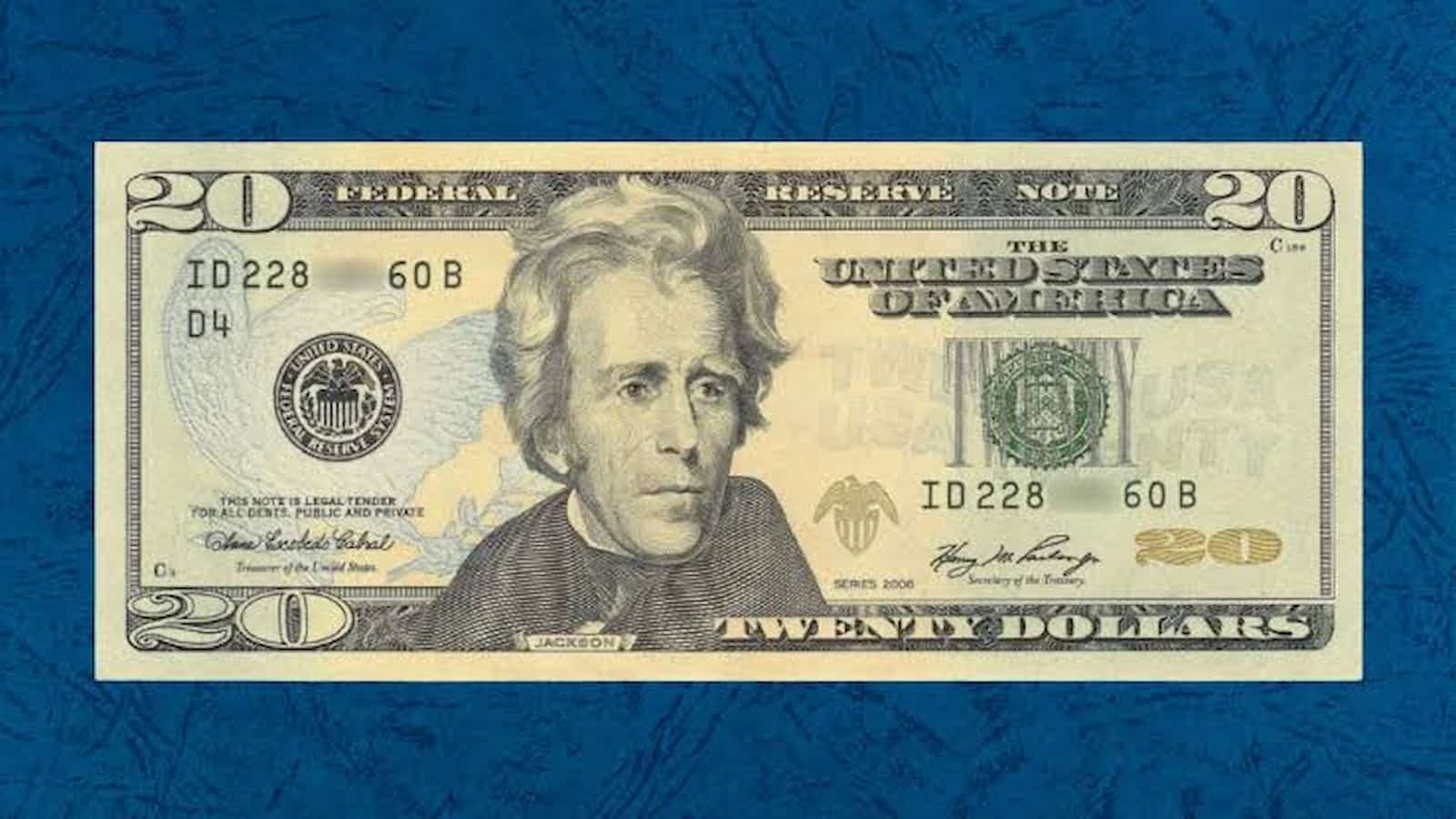
Rare $20 Bills Value: When people talk about rare money, coins usually get all the attention. But rare $20 bills can also be very valuable. Most normal $20 bills are only worth their face value, or a little more. Some old bills and mistake bills can sell for a huge amount. The biggest things that matter are age, rarity, condition, printing errors, and special serial numbers.
| 20-Dollar Bill Value Chart | ||||
|---|---|---|---|---|
| Year | Bill | Seal Color | Circulated Value | Uncirculated Value |
| 1861 | Demand Note | Red | $50,000 | $300,000 and up |
| 1869 | Legal Tender Note | Red | $3,700-15,000 | Up to $50,000 |
| 1863 | Legal Tender Note | Red | $3,500-7,000 | Up to $20,000 |
| 1873 | Legal Tender Note | Red | $1,000-3,000 | Up to $20,000 |
| 1875 | Legal Tender Note | Red | $50-3,000 | Up to $5,000 |
| 1886 | Silver Certificate | Red | $50-2,000 | Up to $3,500 |
| 1928 | Star Note | Red | $100-300 | Up to $10,000 |
| 1977 | Misaligned Print | Green | $10-100 | Up to $5,000 |
| 1996 | Inverted Serial Number | Green | $30-100 | $1,000-3,000 |
| 2004 | Off-Center Print | Green | $30-500 | $500-2,000 |
| 2006 | Serial Number Font Misprint | Green | $30-1,000 | $1,000-5,000 |
Old bills and Rare Prints
Some of the most valuable $20 bills come from the 1800s. The 1861 Demand Note is one of the rarest. It was printed during the Civil War and was the first paper money ever issued in US history. Only 22 are known to exist. That is why a good one can sell for $300,000 to $500,000. Lower-quality ones can still bring around $50,000.
ACH Payments Explained: How to Pay Bills Directly From Your Bank
Another very famous bill is the 1869 Legal Tender Note. It is part of the “Rainbow Series” and is loved by collectors because of its bright look and old design. It can be worth $3,700 to $15,000, and top-quality examples can go up to $50,000. The 1863 Legal Tender Note is also highly wanted. It can sell for $3,500 to $7,000, while very clean notes can reach $20,000.
Other old bills also bring strong prices. The 1873 Legal Tender Note can go up to $20,000. The 1875 Legal Tender Note can reach $5,000. The 1886 Silver Certificate is another special one. Silver certificates were bills that let people exchange them for silver. This one is valuable because of its rarity and the unusual portrait of Daniel Manning on the front.
Mistakes on Modern Bills
Not every valuable $20 bill is old. Some newer ones became valuable because of printing mistakes. A 1928 Star Note is one example. These were used when a bill was damaged or misprinted. A red star was added to show it was a replacement note. It can be worth up to $10,000.
Collectors also like a 1977 bill with a misaligned print, a 1996 bill with an off-center print, a 2004 bill with inverted serial numbers, and a 2006 bill with a serial number font error. These can sell for far more than normal bills, depending on how rare the mistake is and how good the bill looks.
What makes a bill valuable?
For older bills, rarity and condition matter the most. A bill in better shape will usually bring more money. Historical importance also helps. Unique serial numbers can make modern bills more interesting too. Collectors like solid numbers, ladders, radars, repeaters, double quads, binaries, and low numbers.
How to Transfer a Visa Gift Card Balance to Your Bank Account and What Options You Have
How to sell it?
If you think you have a rare $20 bill, the safest way to sell it is through a rare coin shop or a trusted paper money dealer. Online rare money sellers can also help. Selling it through a specialist is better than trying to do it alone, because experts can check if it is real and explain what it may be worth.