ACH Payments: ACH means Automated Clearing House. It is a payment network in the United States that helps move money between bank accounts and credit unions. People use it for many everyday payments, including salaries, tax refunds, bills, subscriptions, tuition and other payments.
You may already use ACH payments without knowing it. For example, when your salary goes straight into your bank account instead of getting paid in cash or by cheque, it can be an ACH payment. The same thing can happen when your electricity bill, phone bill or loan payment is taken directly from your bank account.
Businesses also use ACH to collect money from customers or pay workers and suppliers. It can be cheaper than using cards or wire transfers, especially when a company handles regular payments. For customers, ACH can also be useful for larger purchases because the payment comes directly from a bank account instead of depending on a credit card limit.
Can You Open a PayPal Account Under 18? Here’s What the Rules Say
The ACH Network is used on a very large scale. In 2025, it processed 35.2 billion payments worth about $93 trillion. This includes both personal and business transactions.
| ACH term | Meaning |
|---|---|
| ACH credit | Money is pushed out from one account |
| ACH debit | Money is pulled from an account after permission is given |
| ACH network | The system that moves the money between banks |
| Nacha | The group that writes the rules for the ACH Network |
How ACH Transfers Work
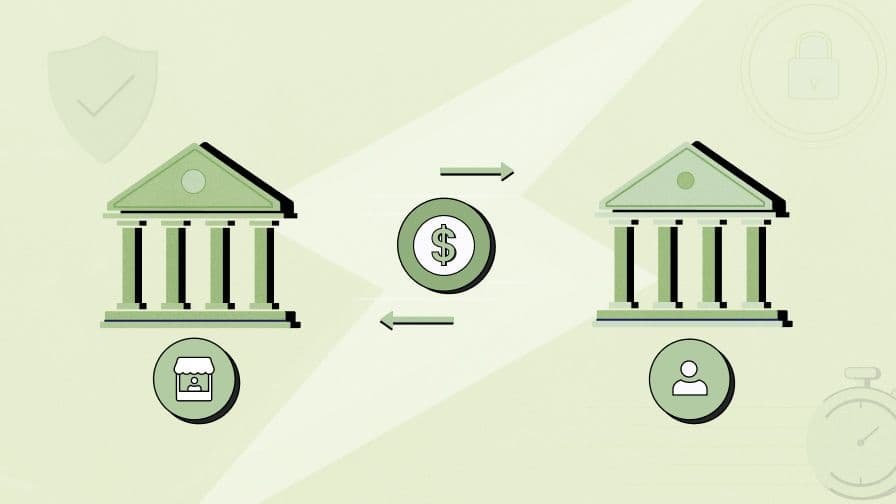
ACH transfers do not move money in the same instant as a card tap. They usually move in batches. NACHA says the ACH Network runs during business days and settles payments several times a day. Same Day ACH was expanded in 2021, and it now gives businesses and banks a faster option for many payments.
That means an ACH transfer can take a few hours or a few days, depending on the type of payment and the processing window. Standard ACH is slower than instant payments, but it is still much faster and more flexible than paper cheques.
A simple look at the main ACH players
| Part | What it does |
| ODFI | The bank that starts the transfer request |
| RDFI | The bank that receives the request |
| ACH operator | The network that routes and settles the batch |
In simple words, the bank that starts the request is not always the same bank that ends up handling the final money movement. The names describe where the request begins and where it is received in the ACH process.
Who Uses ACH and Why?
ACH is used by many different people and organizations. It is common for things like payroll, tax refunds, tax payments, retirement contributions, college tuition, charity donations, business purchases, and money sent between family members.
| Common ACH use | Easy example |
| Consumer bills | Power bill, water bill, phone bill |
| Direct deposit | Salary from an employer |
| Tax refunds | Money from the government |
| Commercial purchases | Business-to-business payment |
| Donations | Giving money to a charity |
| Tuition | Paying a school or college |
| Transfers to family | Sending money between accounts |
Direct Deposit and Direct Payment
ACH transfers are usually divided into two broad types: direct deposit and direct payment. A direct deposit is money going into an account. A direct payment is money going out of an account.
ACH Direct Deposit
Direct deposit means money comes from a business or government body into a consumer account. This includes payroll, expense reimbursements, benefits, tax refunds, and interest or annuity payments. If someone gets paid through direct deposit, there is a strong chance that the payment is moving through ACH. Split deposits, where a paycheck is divided into more than one account, can also use ACH.
ACH Direct Payment
Direct payment is when money leaves your account through ACH. This is the type people often use for bills. A customer gives permission, and the business later pulls the money from the account on the agreed date.
How a Business Accepts ACH Payments
Businesses usually start by adding ACH as a payment option in their checkout or billing system. After that, they collect customer consent and bank details, then verify the account before taking money. Stripe says ACH Direct Debit lets a business pull money from a customer’s bank account after the customer gives permission. Stripe also notes that microdeposits may be used to confirm account details before real payments begin.
Did You Lose Your SNAP Benefits? Eligibility and How to Get a Single $400 Payment
Basic Steps for a Business to Accept ACH Payments:
- Open a business bank account
- Add ACH to the payment option
- Get the customer’s permission
- Collect the bank details
- Verify the account
A mandate is just a clear consent form that allows the business to pull money from the customer’s account. This is a normal part of ACH direct debit payments.
How Much Does ACH Cost?
The cost of ACH depends on the payment provider. Stripe’s current pricing page shows ACH Direct Debit at 0.8% with a $5 cap. That means a $100 payment would cost $0.80, while larger payments would not go above the $5 cap. Stripe also says there are no monthly fees or verification fees for that option.
| Provider example | Fee |
| Stripe ACH Direct Debit | 0.8% |
| Maximum fee | $5 |
| Monthly fee | None |
| Verification fee | None |
ACH vs Wire Transfers and EFTs
ACH is not the same as a wire transfer. ACH uses the ACH Network, while wire transfers use the Fedwire Funds Service. ACH is also a type of EFT, which means electronic funds transfer. EFT is the bigger umbrella term, and ACH sits inside it.
LIHEAP $100 Payment: Who Qualifies For Pennsylvania’s Extra Summer Energy Credit?
- ACH: ACH payments use the ACH Network to move money between bank accounts. They are often used for bills, payroll, subscriptions and other regular payments.
- Wire transfer: Wire transfers use a different banking system called Fedwire in the U.S. They are generally used when a payment needs to move quickly. Wire transfers can also be used for international payments.
- EFT: Electronic Funds Transfer is a broad term for different types of electronic money transfers. ACH is one type of EFT, but not every EFT is an ACH payment.
Why Businesses Prefer ACH?
Businesses use ACH because it can lower payment costs, save time and make bookkeeping easier. It is also useful for regular bills because payments can be automated. ACH rules also require sensitive bank information to be protected.
- ACH payments are often cheaper than using credit cards or paper checks.
- Businesses can easily keep a record of payments and see where the money came from or where it was sent.
- ACH works well for monthly bills, subscriptions, salaries and other recurring payments.
- Payments can be scheduled ahead of time and only taken after the customer gives permission.
- ACH rules require sensitive bank information to be properly protected.