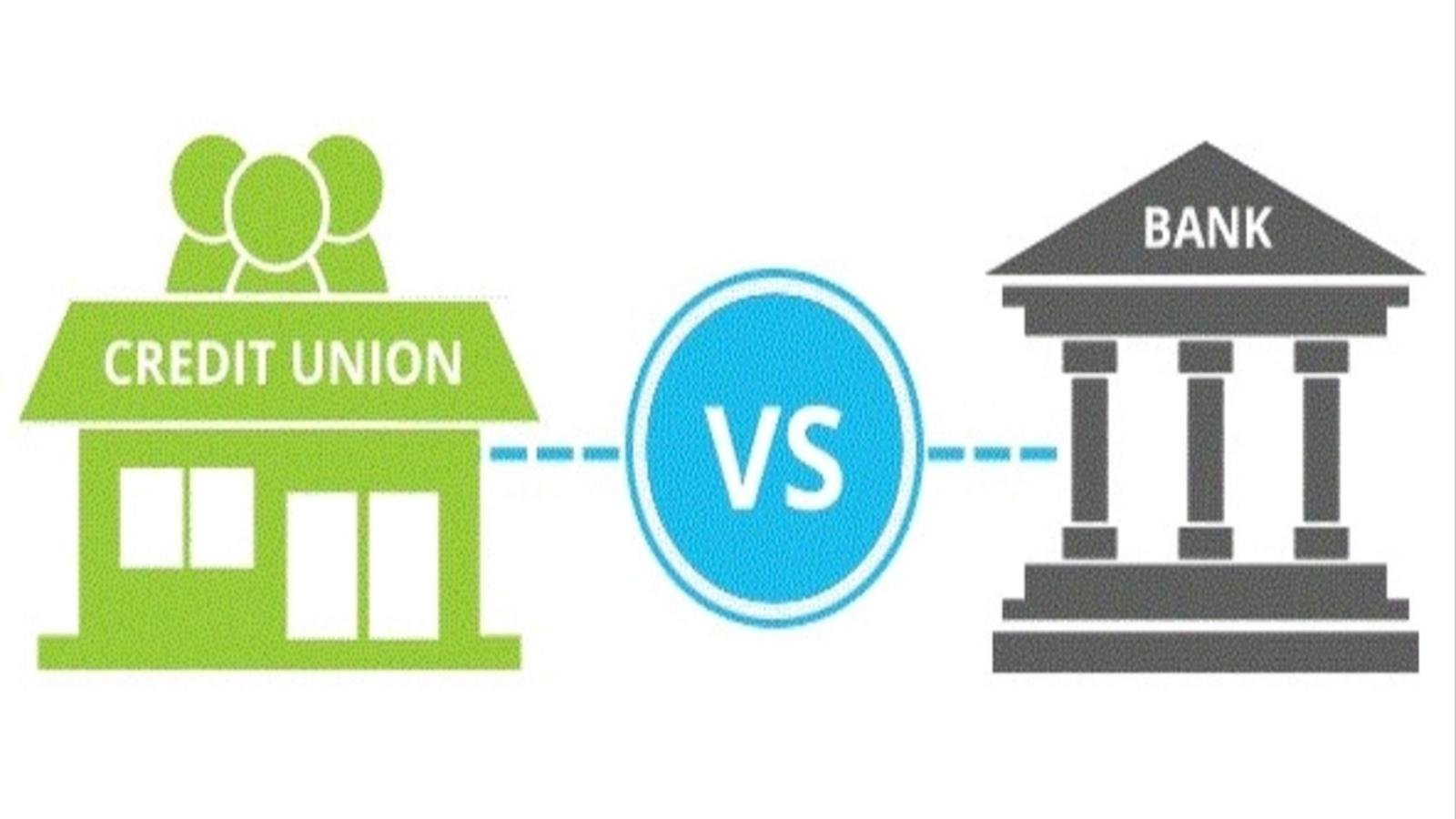
Credit Union vs. Bank: Picking a place for your money is easy at first. Then you actually compare options, and it gets more complicated. Banks and credit unions both provide the usual basics. You can find checking and savings accounts, debit cards, loans, credit cards, and apps for mobile banking. Even so, the two types of institutions work in different ways.
A lot of it comes down to who owns the place and why it exists. Many credit unions are member-owned and run as not-for-profit cooperatives. Banks, in contrast, are often built as for-profit businesses. They are usually owned by shareholders or private owners. Because of that, you may see differences in fees, interest rates, how you qualify for an account, and what day-to-day service feels like.
Best Credit Union Savings Rates in August 2026: Where to Earn the Most
What Is a Credit Union?
A credit union is a financial group that is not-for-profit. It is run for and by the people who use it. When you sign up, you may also be treated as an owner in the organization.
Rather than sending profits to outside shareholders, credit unions can put earnings back into the member community. That can show up as better savings rates, lower loan rates, and fewer fees. Members often vote to choose the board of directors.
Credit unions can provide many of the same services people expect from banks, including:
- Checking and savings accounts
- Debit and credit cards
- Auto loans
- Personal loans
- Mortgages
- Business loans
- Mobile and online banking
- Direct deposit
What Is a Bank?
A bank is a financial institution that accepts deposits and provides products such as checking and savings accounts, loans and other financial services. Unlike credit unions, banks generally operate as for-profit businesses.
Banks can be tiny local lenders or big banks that operate across the country. Some exist only online too. With this mix, customers usually have more options. They may find different locations to visit, different products to use, and different levels of tech support.
A larger bank can be easier to use in some cases. For example, a national bank might have many branches and ATMs. An online bank may focus more on its app and website, and it might list rates that look attractive. Still, you have to check the details. Charges and account rules can differ a lot from one bank to another.
Navy Federal Credit Union Membership 2026: Eligibility, Requirements and Benefits
Credit Union vs. Bank
1. Ownership
This is one of the clearest differences.
At a credit union
You are a member and, in a sense, an owner. Members can generally vote for the board of directors, which helps oversee the institution.
At a bank
You are typically a customer. Ownership usually belongs to shareholders or other owners rather than the people who hold deposit accounts.
For someone who values a cooperative, member-focused model, this distinction can be important.
2. Membership Requirements
Getting an account at most banks is usually simple. You just need to follow the bank’s rules and provide the right documents for ID.
Credit unions work a bit differently. They can limit who may join. This is called a field of membership. To join, you must fit one of the allowed categories, like these:
- You work for a certain employer
- You have a qualifying family tie
- You live, work or attend school in an approved area
- You belong to a group that the credit union recognizes
- After you qualify, many people start by opening a share account. That step is what sets up membership.
One helpful point is that the rules are not always as tight as you might think. Some people already meet the requirements through a job, a relative or a local community tie.
3. Interest Rates
Credit unions are run as not-for-profit groups. They return earnings to their members. Because of that, they may set better rates on savings and charge less on loans than many banks do.
Still, you should not assume one credit union will always beat every bank. Rates change, and the numbers matter.
When you compare, look at the actual figures for:
- Savings APY
- CD or certificate rates
- Auto loan APR
- Mortgage rates
- Personal loan rates
- Credit card APR
Even a small gap can add up. This is true more often when the loan amount is large and the term is long.
4. Fees
Fees are another area where credit unions may have an advantage. Credit unions often return earnings to members through reduced fees, although every institution has its own fee schedule.
Common fees worth comparing include:
- Monthly maintenance fees
- Overdraft fees
- ATM fees
- Out-of-network ATM charges
- Minimum balance fees
- Wire-transfer fees
Don’t choose solely based on whether an institution calls itself a bank or credit union. Always review the specific account’s fee disclosure.
Largest Credit Unions in the U.S. in 2026: Top 10 by Assets
Are Your Deposits Safe?
Both banks and credit unions can offer federal deposit insurance, but you should confirm that the institution is federally insured.
At an FDIC-insured bank, deposits are generally insured up to $250,000 per depositor, per insured bank, for each account ownership category.
At a federally insured credit union, the National Credit Union Share Insurance Fund, administered by the NCUA, provides standard coverage of up to $250,000 per member-owner, per insured credit union, for each ownership category, subject to applicable rules.
That means credit unions are not inherently less safe than banks simply because they are credit unions. The key is to check whether the institution and your deposits have the appropriate federal insurance coverage.
Branches, ATMs and Convenience
Big banks can have an edge if you care about having offices across the country. That can help if you travel often or just like to do things in person.
Credit unions sometimes have fewer branches. This is true for smaller local groups. Still, many credit unions take part in shared branch sites and ATM systems. That can make it easier to use cash and services even if a member is not near the main branch.
Before you open an account, check a few things:
- Are there branches near where I live or work?
- Are there ATMs close by with no extra fees?
- Can I put checks into my account from my phone?
- Does the bank have solid online tools and a usable mobile app?
- Will I be able to reach someone for help when I need it?
StudentAid BC 2026: How to Apply for Student Loans
Digital Banking And Tech
It used to be common to say that credit unions lag on tech. That is not always true now. A lot of credit unions offer mobile apps, online account use, and remote check deposits. But the level of support and the ease of the tools can be different from one place to another.
Bigger banks often have more money to build newer apps. They may also add more options for digital banking. At the same time, a smaller credit union may feel more personal, especially when you need help.
If you care about technology, try the app yourself. Look at what features are included. Also read the account terms before you decide.
Pros and Cons of a Credit Union
Pros
- Member-owned structure
- People often pay less in fees
- Some members may see better savings rates
- Loan rates can be lower too
- Service may feel more personal and community-based
- Deposits can be federally insured at approved places
Cons
- You might need to meet a membership rule
- In some cities there may be fewer branches
- Apps and product options can differ by credit union
- Not every service may match what big banks offer
Pros and Cons of a Bank
Pros
- It is usually simple to open an account
- Large banks often have many branches and ATMs
- They may offer a wider set of products
- Digital tools are often strong
- You can choose from national, regional, local, or online banks
Cons
- Fees can be higher for some accounts
- Savings and loan rates may not be as strong in some cases
- At big institutions, support can feel less personal
OSAP 2026: Eligibility, Deadlines and Payment Dates
Which Is Better: A Credit Union or a Bank?
There is no single best option. If you are aiming for lower fees, decent loan rates, solid savings rates, and a service style that focuses on members, a credit union might fit you better.
If you need more in-person branch access, more specialized products, or a specific kind of digital banking setup, a bank could be the better match.
The Consumer Financial Protection Bureau says both banks and credit unions can help you keep money in a safe and easy way. It also points out that federally insured accounts add key protections for deposits that qualify.